THE POTTER'S WHEEL
THE POTTER'S WHEEL
The Art of the Potter and Its Biblical Meanings
The profession of potter is one of the oldest known to mankind, and the process of creating clay pots has a long tradition dating back thousands of years. Around 4,500 years BC, the lathe was already used in the Middle Eastern city of Shushan. This technique spread to Mesopotamia, now Iraq, and is still practiced today, preserving its ancestral roots.
The work of the potter not only requires skill and patience but also carries deep symbolism in the Bible, reflecting the relationship between God and His people. The pottery process is divided into four main stages, each of which can be viewed through a biblical and prophetic lens.
STEP 1 - SEPARATING THE CLAY
There are around 200 types of clay in nature, varying in strength, color, and composition. The potter must choose the right clay to create a quality vessel. In the Bible, clay is often used as a symbol of humanity. In Jeremiah 18:1-6, God uses the metaphor of the potter to describe His relationship with the people of Israel. Clay represents humanity, and God, as the potter, shapes and transforms people's lives according to His divine plan.
STEP 2 - KNEADING THE CLAY
After extraction, the clay needs to be kneaded to remove impurities and obtain the necessary consistency. This process is essential to ensure that the clay has the right texture for molding. Biblically, kneading the clay can be seen as a process of purification and preparation. In Isaiah 64:8, the prophet cries out to God, "But You are our Father; we are the clay, and You are our potter." Here, kneading can symbolize God's work in purifying and preparing His people to fulfill His purpose.
STEP 3 - MOLDING THE CLAY
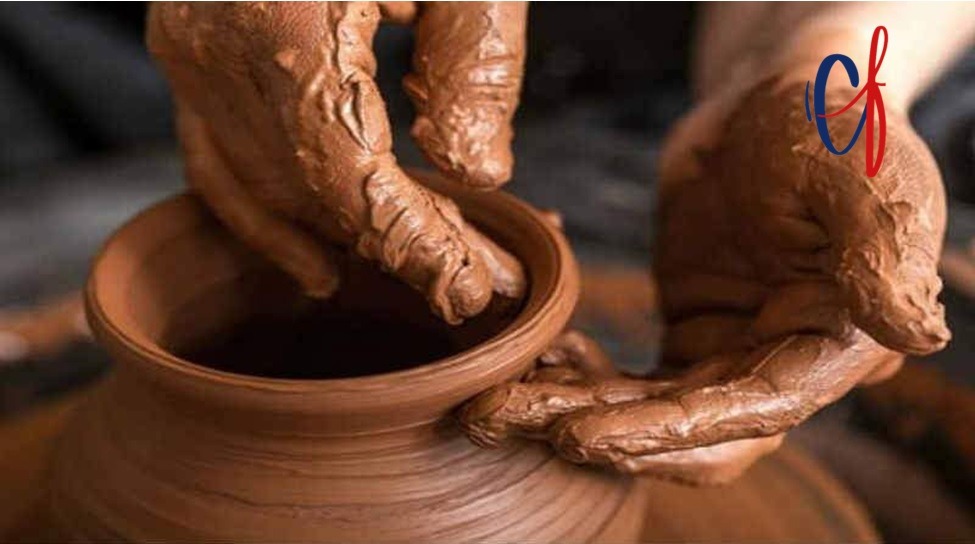
With the clay prepared, the potter begins molding. The clay is placed on the lathe, which rotates while the potter uses his hands to shape it. The potter shapes the clay starting from the inside out, removing imperfections and adjusting the shape of the pot. This stage reflects God's work in the lives of believers. In Romans 9:21, Paul writes, "Has not the potter power over the clay, to make of the same lump one vessel unto honor, and another unto dishonor?" This verse highlights God's sovereignty in shaping and transforming the lives of individuals according to His will.
STEP 4 - THE FIERY FURNACE
The final step is firing the pot in the kiln. After molding, the pot is placed in the furnace, which is already heated, and kept there for about twenty-four hours. The heat removes the bad smell from the clay and completes the purification process, making the pot resistant and free of impurities. In the Bible, fire is often associated with purification and the testing of faith. In 1 Peter 1:7, it is said that the trial of faith is more precious than gold that perishes, being tested by fire. Thus, the burning process can be seen as a final test that reflects spiritual purification and the strengthening of faith.
Conclusion
The work of the potter is more than just a craft technique; it is a powerful biblical symbol that illustrates the relationship between God and His people. From the selection of the clay to the final firing, each stage of the pottery process reflects aspects of purification, molding and, spiritual transformation. Through this ancient work, we are reminded of God's ability to shape our lives and purify us for His divine purposes.